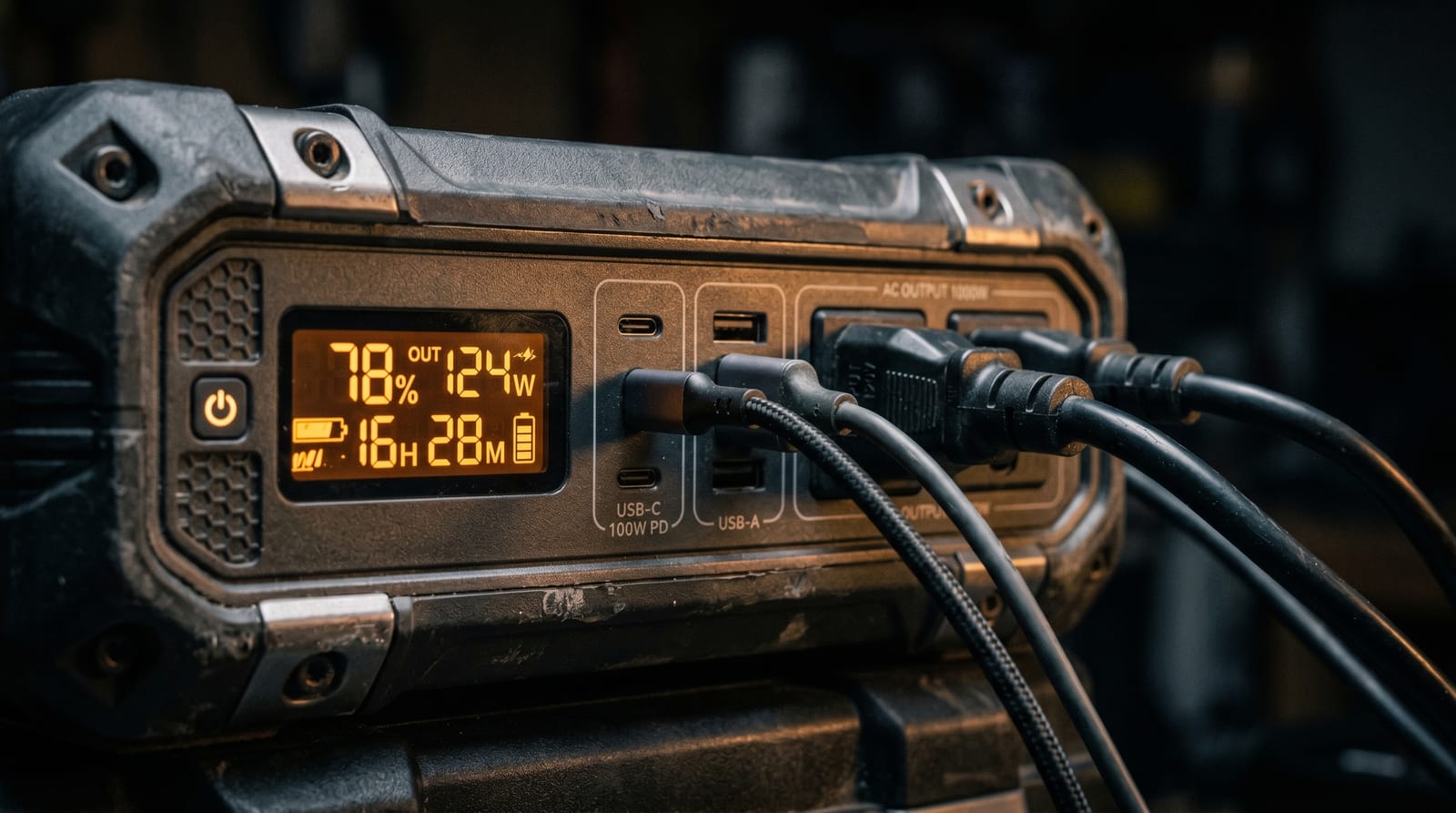
EcoFlow DELTA 2 Max
Premium tier · Editor's Choice
- Capacity
- 2,048Wh
- AC Output
- 2,400W
- Weight
- 50 lbs
- Battery
- LFP · 3,000+ cycles
- Fast Charge
- 0-80% in 1.1hr
Best overall: EcoFlow DELTA 2 Max (premium tier) — 2,048Wh LiFePO4, 2,400W, 0-80% in ~1hr. Budget: Bluetti AC70 (budget tier). Best mid-range: Anker SOLIX C800X (mid-hundreds).
Premium tier · Editor's Choice
Upper mid tier · Lightweight 1kWh
Mid-hundreds tier · Built-in Lights
Budget tier · Only 17 lbs
Best Value · Budget tier
These units run 20-50 lbs — Prime's free two-day shipping means no extra freight charge and no waiting around for a heavy box. A free 30-day trial covers it if you don't already have Prime.
Affiliate link — we may earn a commission at no extra cost to you.| Feature | EcoFlow DELTA 2 Max 🏆 🏆 | Jackery Explorer 1000 v2 | Anker SOLIX C800X | EcoFlow RIVER 2 Pro | Bluetti AC70 |
|---|---|---|---|---|---|
| Price | Premium tier | Upper mid tier | Mid-hundreds tier | Budget tier | Budget tier |
| Capacity | 2,048Wh | 1,070Wh | 768Wh | 768Wh | 768Wh |
| AC Output | 2,400W | 1,500W | 1,200W | 800W | 1,000W |
| Weight | 50 lbs | 23.8 lbs | 24 lbs | 17 lbs | 22 lbs |
| Battery | LFP · 3,000+ cycles | LFP · 4,000+ cycles | LFP · 3,000+ cycles | LFP · 3,000+ cycles | LFP · 3,000+ cycles |
| Fast Charge | 0-80% in 1.1hr | 0-100% in ~1.7hr | 0-80% in 58min | 0-100% in 70min | 0-80% in 45min |
Best Overall · Editor's Choice · 2,048Wh
The EcoFlow DELTA 2 Max dominates the portable power station market in 2026 with its combination of massive capacity, blazing-fast charging, and smart home integration. At 2,048Wh, it comfortably powers essential home appliances during an outage — think refrigerator, lights, Wi-Fi router, and phone charging for 8-12 hours straight.
What truly sets it apart is charging speed. Plug it into a wall outlet and you'll hit 80% in just over an hour — critical during the window between hearing a storm warning and losing power. Add up to two expansion batteries to reach 6,144Wh for multi-day backup. The EcoFlow app provides real-time monitoring, scheduled charging (to take advantage of off-peak electricity rates), and remote control from anywhere.
The DELTA 2 Max uses LiFePO4 (LFP) chemistry rated for 3,000+ cycles to 80% capacity — roughly 10 years of daily use. Frequently discounted well below its original MSRP, it's a genuine bargain for this tier of performance.
Best Value · Budget tier · 768Wh
If you want serious portable power without breaking the bank, the Bluetti AC70 is the clear winner, priced in the budget tier. It packs 768Wh of LiFePO4 capacity into a 22-pound package — light enough for car camping, powerful enough to run a mini-fridge, CPAP machine, or charge a laptop 10+ times.
The AC70 punches above its weight class with 1,000W continuous output (vs. 800W on the similarly-priced EcoFlow RIVER 2 Pro) and supports up to 500W solar input for off-grid charging. The 0-80% AC charge time of just 45 minutes means you can top it off during a quick lunch stop on a road trip.
Best Mid-Range · Built-in Lights · 768Wh (solar bundle)
Anker's SOLIX C800X sits in the sweet spot between the budget Bluetti AC70 and the premium EcoFlow DELTA 2 Max. In the mid-hundreds price tier, you get 768Wh of LFP capacity with 1,200W continuous output — enough to run a blender, power drill, or small space heater that cheaper units can't handle. On Amazon it's commonly bundled with a 100W solar panel.
The standout feature is the built-in retractable camping light pole with multiple modes (spotlight, floodlight, SOS). It's a genuinely clever addition that eliminates the need for a separate lantern at camp.
Most Portable · Only 17 lbs · 768Wh
At just 17.2 pounds, the EcoFlow RIVER 2 Pro is the lightest 768Wh power station you can buy — perfect for hikers, car campers, and anyone who needs to carry their power source. Its X-Boost technology lets it run devices up to 1,600W (like hair dryers or small heaters) by intelligently reducing voltage for resistive loads.
Lightweight 1kWh · 1,070Wh · 1,500W
Jackery's Explorer 1000 v2 is the lightweight 1kWh pick — 1,070Wh of LiFePO4 capacity and 1,500W output in a package under 24 lbs, noticeably lighter and more portable than the bigger EcoFlow DELTA 2 Max. It runs a full-size fridge, CPAP, laptops, and most household devices, and recharges quickly from a wall outlet — a great balance of capacity and carryability for camping, RV use, or outage backup.
Every unit on this list uses LiFePO4 (LFP) battery chemistry. This is non-negotiable in 2026. LFP batteries last 3,000-4,000+ charge cycles (vs. 500-800 for older lithium-ion), meaning a unit charged daily will last 8-10+ years. They're also inherently safer — LFP cells don't experience thermal runaway, the fire risk associated with standard lithium-ion batteries.
| Device | Typical Wattage |
|---|---|
| Smartphone charger | 20-30W |
| Laptop | 45-100W |
| LED light | 10-20W |
| Mini fridge | 50-80W |
| Full-size refrigerator | 100-200W |
| CPAP machine | 30-60W |
| TV (50") | 80-120W |
| Microwave | 700-1,200W |
| Space heater | 1,000-1,500W |
The EcoFlow DELTA 2 Max is the best overall portable power station in 2026. It offers 2,048Wh capacity (expandable to 6,144Wh), 2,400W AC output, and charges from 0-80% in just over an hour. It typically sells in the premium tier.
Runtime depends on capacity and device draw. A 1,000Wh station runs a 60W laptop for ~14 hours, a 100W TV for ~8 hours, or a 700W microwave for ~1.2 hours. Use this formula: Runtime (hours) = Capacity (Wh) ÷ Device Wattage × 0.85 (efficiency loss).
Yes. LiFePO4 (LFP) batteries last 3,000-4,000+ charge cycles vs. 500-800 for standard lithium-ion. They're safer (no thermal runaway risk), perform better in extreme temperatures, and maintain capacity longer. All top 2026 models use LFP chemistry.
Small to mid-size stations (500-1,000Wh) can run essentials like lights, phones, and a mini fridge. For whole-home backup during outages, you need a 2,000Wh+ unit like the EcoFlow DELTA 2 Max or Anker SOLIX F3800 Plus, ideally with a transfer switch.
Budget options sit in the low hundreds (Bluetti AC70). Mid-range models run in the mid-to-upper hundreds (Anker SOLIX C800X, Jackery Explorer 1000 v2). Premium units land in the four-figure tier (EcoFlow DELTA 2 Max). Prices change often, so check the live price on Amazon.
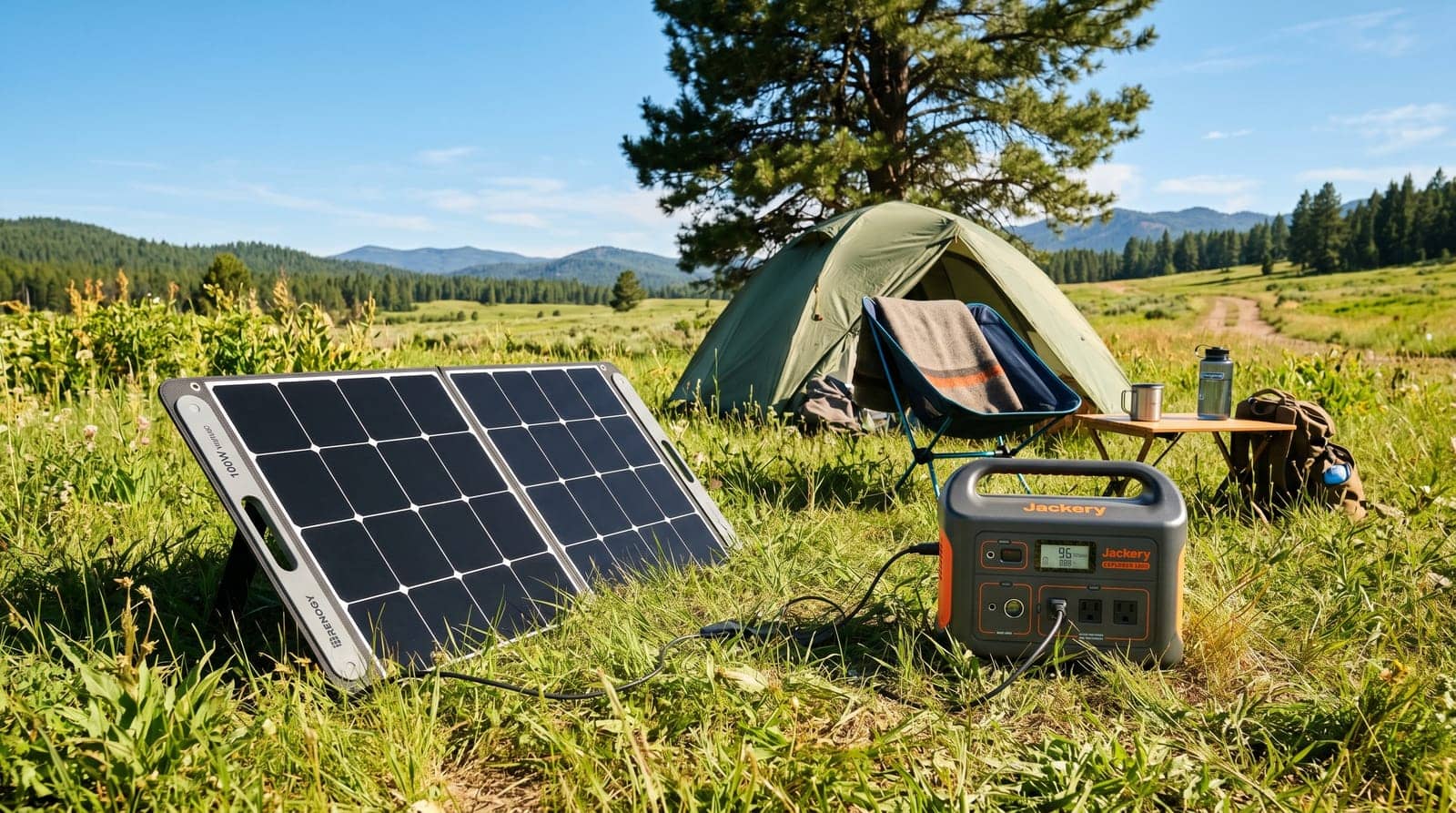
Yes — all major brands support solar charging. Input capacity varies: budget models accept 200-300W solar, while premium units like the EcoFlow DELTA 2 Max accept up to 1,000W for fast solar recharging. Full solar charge typically takes 3-8 hours depending on panel size and sunlight.
A folding solar panel matched to your station's input lets you top up off-grid instead of hunting for an outlet.
Shop on Amazon →A longer input cable lets you park the panel in full sun while the station stays shaded — a popular upgrade for campsite setups.
Shop on Amazon →Mismatched connectors are the most common solar-charging headache; an adapter kit covers most panel-to-station combos.
Shop on Amazon →A padded case protects the display and ports during transport and makes tossing the unit in a trunk a lot less stressful.
Shop on Amazon →A budget-friendly way to top off your station from a vehicle's 12V outlet on the drive to the campsite.
Shop on Amazon →Adds extra outlets and a layer of protection for sensitive electronics plugged into the station's AC ports.
Shop on Amazon →This guide was compiled from manufacturer specifications (EcoFlow, Jackery, Bluetti, Anker official sites), verified Amazon pricing, professional reviews from CNET, The Verge, and Wirecutter, and owner feedback from Reddit r/SolarDIY, r/Overlanding, and r/preppers. Prices reflect the lowest verified Amazon price as of the date shown.
Last updated: May 28, 2026. Lifestyle imagery is illustrative.